There is a particular kind of satisfaction in making a neat arrangement untidy. Pixy understands it. A little pink ball takes one good angle, and a very respectable picture starts falling into pieces.
Then you visit the gallery and find yourself doing something almost opposite: cutting away a covering to bring a picture back. That conversation between breaking and revealing is the part of Pixy I want people to discover. The first tap is easy to understand. The next few minutes have more places to go.
The edge of the screen is your launch pad
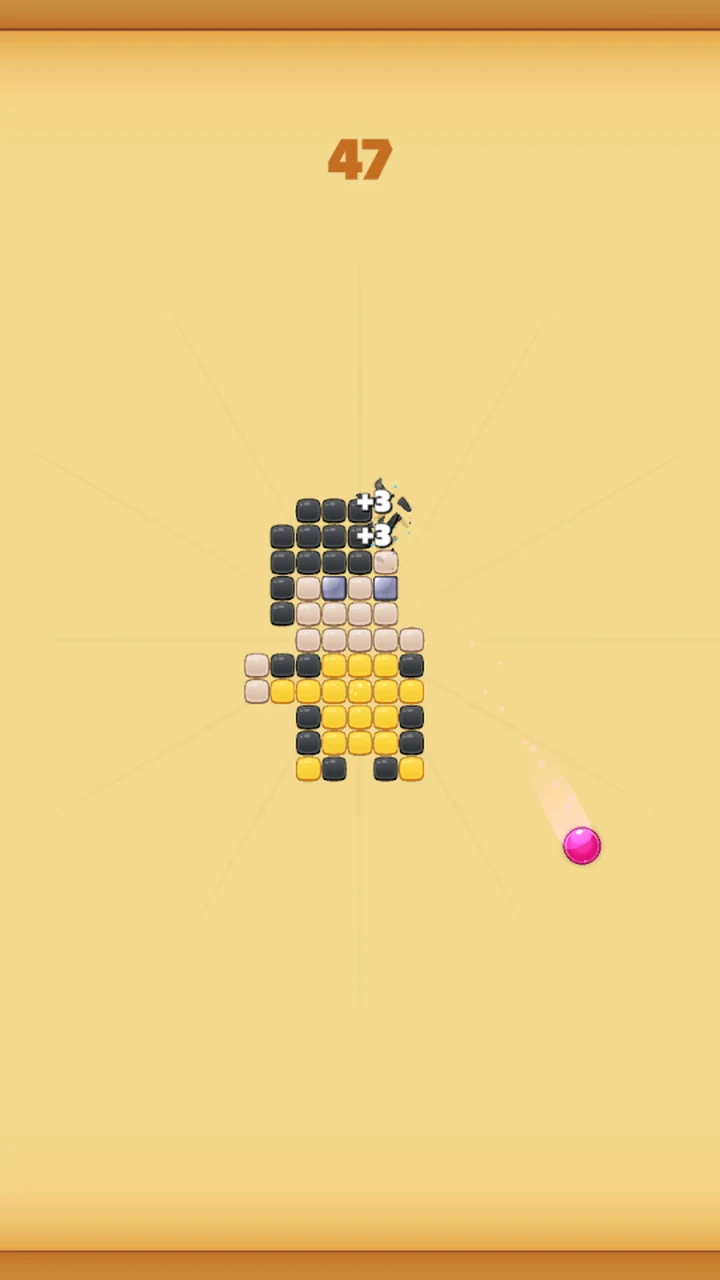
In the block-breaking game, the ball travels around the border. You watch its position and tap to send it into the board. There is no paddle to drag under every return. The interesting moment comes just before the launch, when a small change of position means a very different line through the blocks.
A rushed tap can shave the outside of a shape. A patient one finds a channel and leaves a much more satisfying mess. As blocks disappear, the board changes underneath your plan: an awkward corner becomes reachable, a dense patch becomes a gap, and the next useful angle moves somewhere else. You are reading the picture as well as aiming at it.
The timer keeps a little pressure on all that admiration. You want effective launches rather than an endless tour of the frame. A good bounce is useful twice: it clears part of the board and helps you understand where the following shot should go. The controls stay small enough that the changing board can be the interesting part.
Some boards deserve a larger reaction
The ball is only the beginning of the toy box. Progress opens up more ways to deal with stubborn blocks, including Mercury, Bomber and Fireball. They bring different kinds of momentum and impact to the same simple pleasure. Bonus effects, extra balls and explosions can take a tidy-looking situation somewhere wonderfully unreasonable.
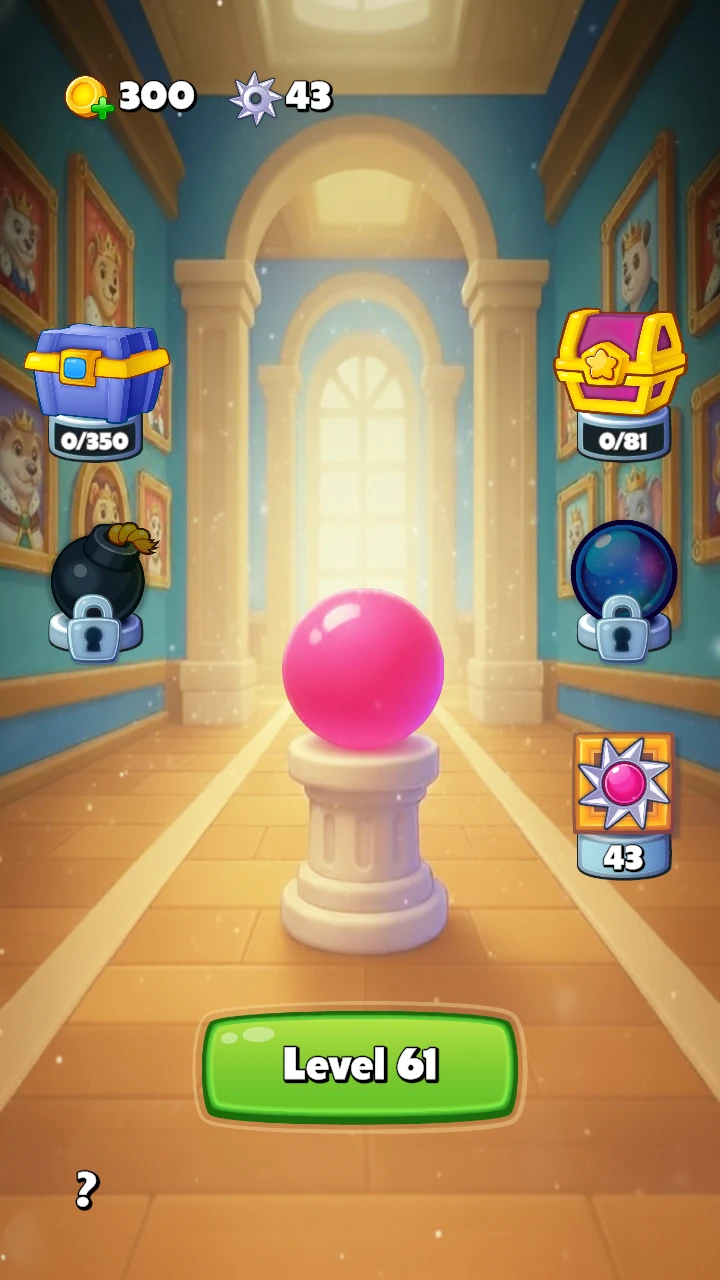
The blocks you break also contribute to the block chest, while stars have a chest of their own. Those meters give ordinary play a second little rhythm: even while concentrating on the current picture, you can see another reward getting closer. New options arrive along the way, so the menu gradually becomes a collection of things you have earned the chance to try.
A different door in the same gallery
Pink Saw is where Pixy changes pace. The ball rests, a covered picture takes the stage, and a small circular saw becomes your way in. The gallery is organised into themed sets. A scene, a portrait and another close look at a creature can belong to the same little world, giving the next frame a reason to catch your eye.
At the start, you have a covering, the outline of a picture, and moving hazards to keep an eye on. Steering the saw through that surface draws a trail. Bring the cut back out to an edge and a piece of the covering can fall away, exposing the art below. The reveal percentage rises with the area you have opened.
A short safe cut, or one brave line?
That is the lovely decision inside the gallery. A modest cut is easier to bring home. A longer route could reveal a generous part of the picture, but keeps you exposed while the hazards move. The line has to be finished; a promising start on its own is not a completed cut. When the remaining shape changes, the next route needs a fresh look.
The saw has a limited stock of lives, and colliding with danger costs one. The already revealed picture gives your progress a visible home, even when the next attempt needs more care. You begin to recognise a landscape through the openings, then choose a cut partly because you want to see what is hiding in a particular corner. Curiosity becomes a surprisingly good reason to take a risk.
I like that the reward occupies exactly the space where the problem used to be. There is no need to explain why removing that last awkward piece feels good. The picture is doing the explaining. At the completion threshold, the gallery lets you move on to the next work and carry that small success forward.
Two kinds of “just one more”
Block breaking and picture cutting ask for different attention. The ball makes you wait for an instant. The saw asks you to commit to a route. One scatters a picture into fragments; the other carefully brings one into view. Both keep the result close to your fingertip, so you can connect what happened to the choice you just made.
This is why the gallery belongs alongside the arcade levels. After a busy stretch of rebounds, there is room to look at an image and decide how to uncover it. After a careful cut, there is still a bright little ball ready to make a mess again. The chests, unlocks and themed pictures connect those short sessions without making every visit feel identical.
The next bounce might find an angle you missed. The next cut might finally reveal the face in the frame. Pixy has room for both impulses, and I suspect that is why its quiet menu never stays quiet for very long.