A toaster, three people to look after, and a road full of robots. This was supposed to be a straightforward trip.
Cyber Clash Survivor begins with an easy instruction: keep moving. Then it keeps finding new things for that movement to mean. In an arena, you are finding breathing room. On the road, you are choosing a gate and checking on the family behind you. In the dark, you are following a signal. The same little hero has quite a lot on their mind.
First, make yourself some room
The arena is where you learn to read the crowd. Attacks fire automatically, leaving your thumb free to steer. A line of enemies is something to circle; a narrow opening is a way through; a patch of pickups is a tempting reason to turn back. Moving well matters more than moving constantly. A long loop around the edge can buy time, but sooner or later you want the rewards in the middle.
Energy pickups feed the upgrades you choose during a run. The next card might introduce a weapon, strengthen one you already carry, or improve a useful passive. A plate launcher, a gumball machine, a washing machine: the equipment has a pleasingly domestic disregard for the seriousness of the situation. The fun is watching individual choices turn into a combination that begins to do the heavy lifting.
The pressure has a rhythm. Waves build, ease off, and return with a different problem. Those quieter beats are useful: gather energy, make a choice, and get your bearings before the next crowd arrives. Keys and exit doors give an arena a destination. Boss encounters ask you to read a much larger enemy without forgetting the smaller ones nearby. Surviving is the beginning of the job; finding your way out finishes it.
Gate Rush: good arithmetic, complicated company
On the road, the screen becomes a moving decision. Three lanes bring arithmetic gates, incoming enemies and crates into view. A helpful gate adds to your ammunition; a bad one can take a painful bite out of it. The large number above your hero makes the consequence wonderfully immediate. You saw the better choice. Now you still have to get there.
The other heroes travel behind you as a family, each with their own health and a little weapon of their own. Robots head for them. A promising gate on the far side of the road can suddenly matter less than an enemy reaching the group. You can move across the road and forward or back within the play area, so positioning is about protection as well as collecting.
A fallen family member waits in a rescue bubble. Getting close can bring them back, at a cost to your own health. It is a small, very readable dilemma: keep the run comfortable for yourself, or spend some of that comfort on someone else. Crates can change your weapon or give you a special attack to save for the right moment. A boss waits at the end, and getting more of the family across the finish line earns a better family bonus.
Skill Rush: pick a lane, pick a personality
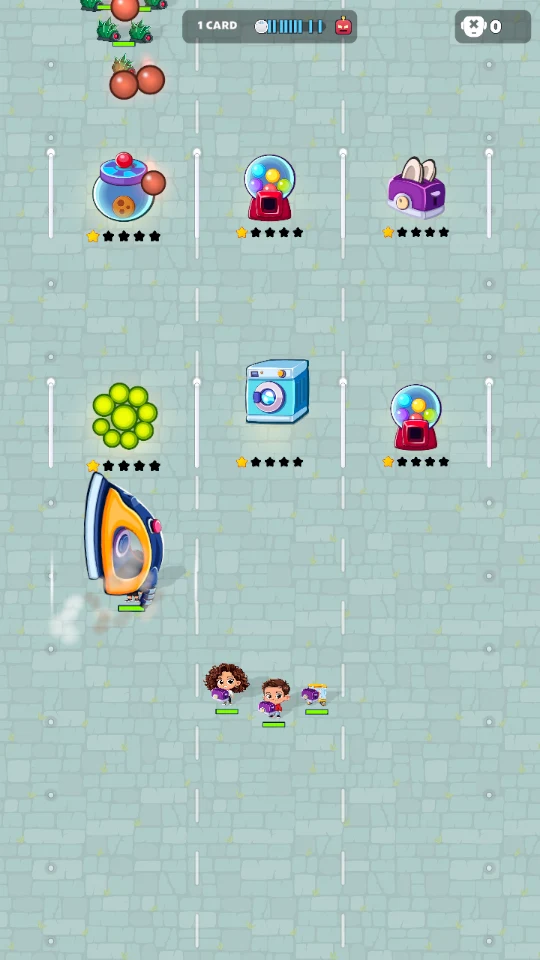
Skill Rush uses the road differently. The rows ahead hold weapon cards. Crossing into one lane means taking that card, and the next row is another chance to add something or make an existing choice stronger. You assemble the run while you are already inside it.
The family still needs an escort. Armies still arrive, and the boss still expects your attention. But now the question is what sort of noisy little machine you are building along the way. A familiar weapon can become more useful with another upgrade; a new one can cover a weakness. I like how visible the thinking is here. Your choice is a place on the road, and a few seconds later its result is flying across the screen.
Volt Loop: draw the way out
Then the weapons give way to an electric trail. In Volt Loop, poles become the points of a route you can close into a circuit. You are watching the enemies and planning the next corner at the same time. A route that gives you plenty of space might make a disappointing loop; a more useful circuit may ask you to stay near the crowd a little longer.
Closing the loop is the payoff. The path you have just walked becomes an attack, so the movement itself has a shape and a purpose. It gives the campaign a different kind of tension: you can often see the good idea before you have quite finished drawing it.
Lights Out: the room is still there. You just cannot see it.
Lights Out shrinks your certainty to a flashlight beam and a soft circle around your feet. The light turns with your movement. Enemies caught in the beam become targets for your volley; the rest of the room remains an uncomfortable possibility. Sweeping the light across a corner is both a search and a way to make that corner safer.
A hot-and-cold meter guides the search for hidden keys. Try a direction, watch the signal change, correct your course. When a key finally appears in the light, the room briefly makes sense. Later hunts can hide several keys, and taking one starts the search for the next. Once the keys are collected, the exit becomes the final thing to find. The familiar act of steering suddenly feels cautious, curious and very personal.
What comes home with you
The workshop ties these very different trips together. Coins from rewards and loot fund lasting improvements, while the energy gathered in an arena belongs to that run’s card choices. That distinction matters: a good run gives you an immediate combination to enjoy and a reason to think about the next one afterward.
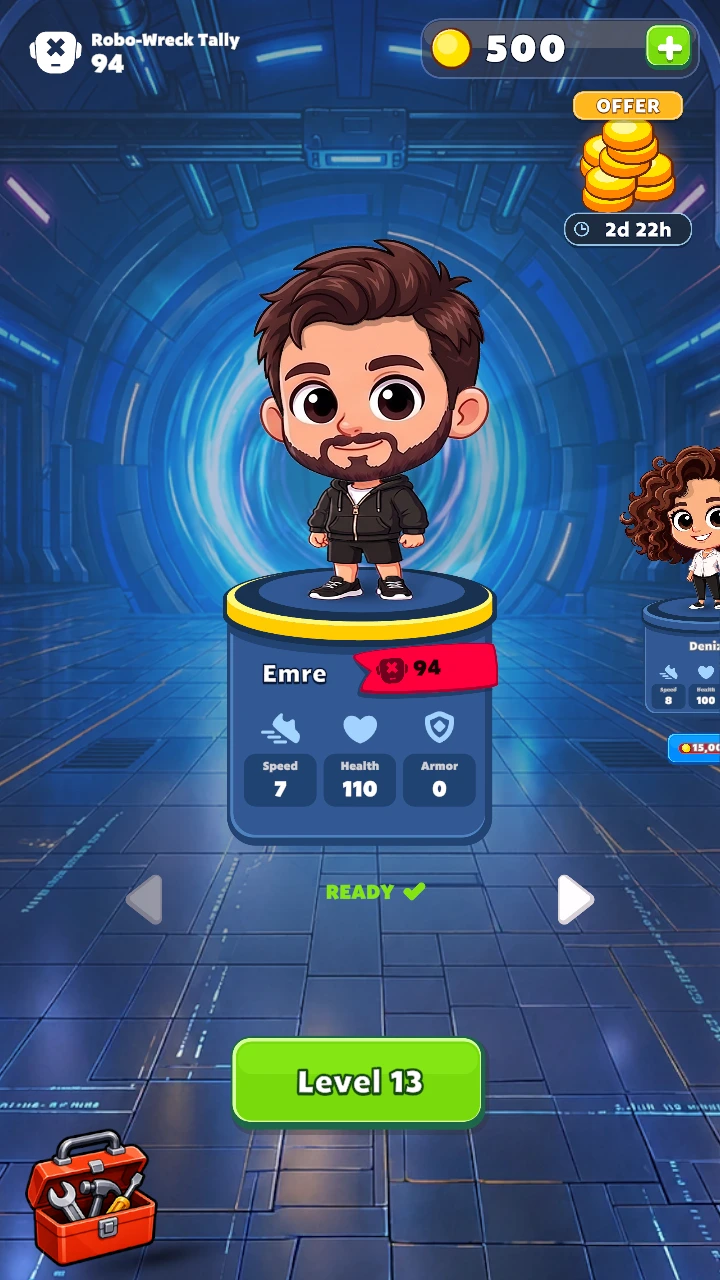
Heroes have different strengths, and the workshop gives your earned coins a useful question: what would make the next attempt feel better? More staying power, a stronger favourite, or another option to try? You return to the campaign with a plan, but the level can still ask you to improvise.
That is the thread running through Cyber Clash. Five modes, one familiar thumb on the screen, and a changing reason to take the next step. Sometimes you are escaping a crowd. Sometimes you are drawing a circuit. Sometimes you turn back because three small people are still coming with you.