The word is obvious. Its letters have other arrangements.
An A is halfway down one column. The letter you want after it is hiding under something you were saving for later. You could move that little group to the empty space—except the empty space stopped being empty two moves ago. Word Stack Solitaire lives in this very pleasant gap between knowing the answer and finding room to build it.
Solitaire went looking for a dictionary
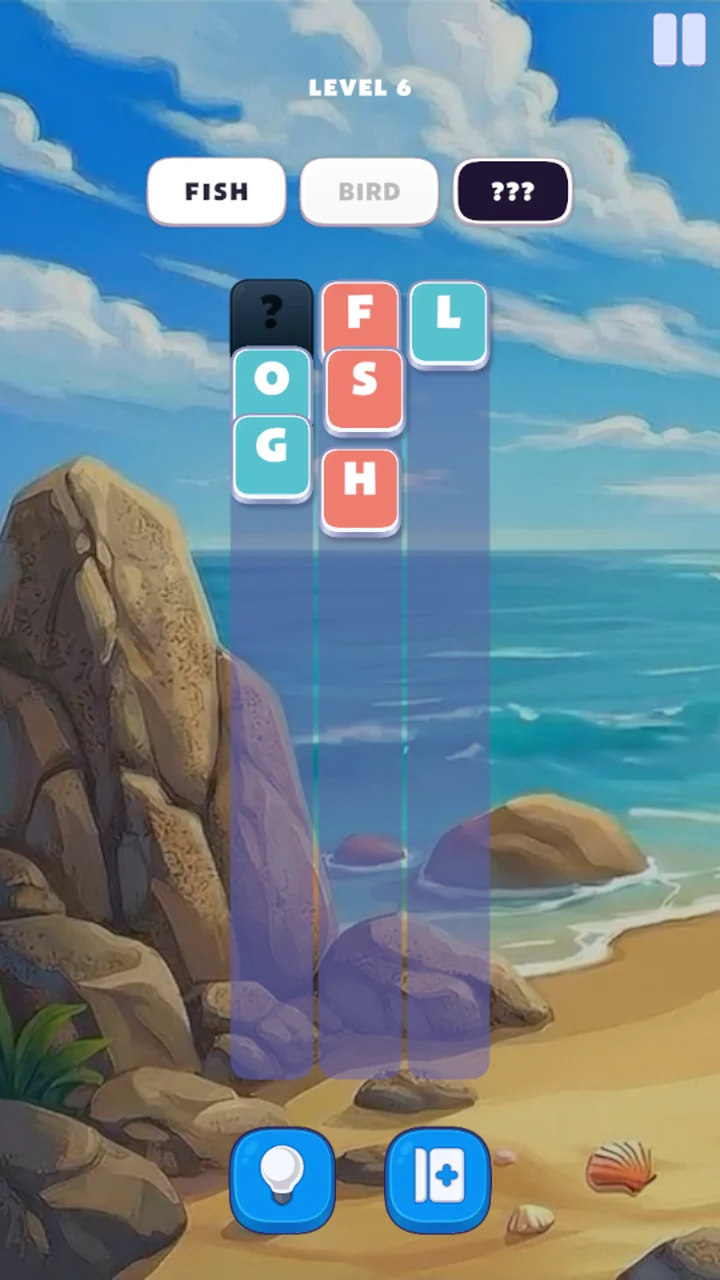
The board is made of letter cards stacked in columns. Target words sit above it, and your task is to arrange the matching letters in order. Completing a word clears those letters from the board, which can uncover a card, free a useful space, or make the next word suddenly much easier to reach. That little chain of consequences is the game.
You can move an individual card, keep a useful group together, and make room for letters within a stack. The question is often where a card should wait rather than where it finally belongs. A column is both a workbench and temporary storage. Moving something out of the way may look untidy for a moment, but the next two moves can explain the whole idea.
That gives a familiar word a second life as a spatial puzzle. Recognising BIRD does not automatically put its B, I, R and D beside one another. You still have to reach them, preserve a helpful sequence, and avoid burying the card you will need next. When the word leaves the board, the satisfaction comes partly from solving it and partly from the space it gives back.
The answer does not always introduce itself
Mystery words replace an open target with a question. A clue gives you a direction to think in while your hands continue arranging the cards. Sometimes the available letters make the answer click immediately. Sometimes the clue makes sense only after you expose another letter. Recognising a word and uncovering the board help each other along.
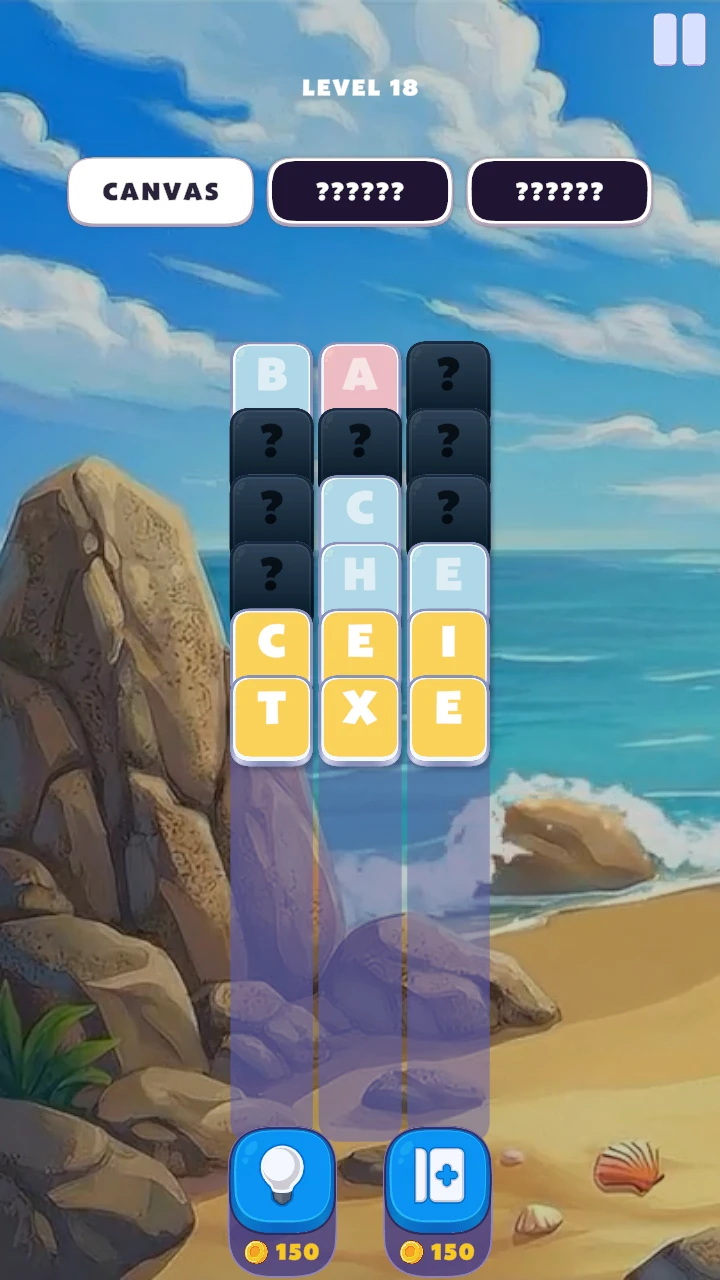
Face-down cards add another kind of uncertainty. You cannot plan around information you have not seen, so freeing a buried card can be worth doing before you know exactly how you will use it. Other layouts make the visual clues less generous. The changing number and arrangement of columns matter too: the same vocabulary can feel very different when the available breathing room changes.
A nudge at the useful moment
There are two very different meanings of a hint here. A word clue helps you understand the hidden answer. Board help can identify a letter’s place in a mystery word, making one piece of the arrangement less uncertain. It gives you something concrete to act on while leaving the rest of the board in your hands.
An extra column can give a crowded puzzle a temporary shelf. Where a shuffle is available, it changes the arrangement and asks you to look again. These tools use in-game resources, so there is a small decision before the larger one: is the board truly stuck, or have you simply been staring at the same two columns for too long? Often a short pause is surprisingly productive.
A thousand small changes of plan
After the tutorial, the solo campaign has 1,000 levels. The point of that long route is the variety of arrangements along it: visible and mystery words, face-down cards, changing layouts, and more demanding combinations of what you can see and what you must uncover. A straightforward board teaches a useful habit. A later one quietly asks whether that habit is still the right approach.
The changing scenery gives those card tables somewhere to live. A beach behind the stacks is not going to solve the puzzle, but it gives the eye a place to rest between decisions. I like the contrast between a calm setting and a board that has become just stubborn enough to hold your attention.
English, Turkish, Spanish and German word sets let you play with the language you want to think in. Changing language changes the actual words and clues, not just the labels around the screen. It is another way for a familiar movement—lifting a card, making room, placing a letter—to present a different little problem.
A puzzle with today’s date on it
The daily puzzle is a more contained visit. Its words follow a theme, and solving them feeds letters into a final Golden Word. So there is a second reveal waiting after the first set of answers: you have been collecting the pieces of one more thing to discover.
The calendar makes completed days visible, and a streak gives returning a gentle bit of continuity. Finish the day’s puzzle, collect the reward, and leave with something complete. It is a different kind of satisfaction from pushing farther through the campaign. You are not deciding how many more levels to do; you have a small appointment with one puzzle.
When the quiet room gets a little competitive
Versus changes the pace by putting a computer opponent on the other side of the contest. Completed words move the score, the balance shifts, and a board you would normally inspect at leisure asks for a quicker decision. The opponent is computer-controlled, and the difficulty can vary from match to match.
Knowing which word you can assemble quickly starts to matter alongside knowing which word is there. Do you finish the obvious small opportunity, or free the letters for the more useful one? The card rules remain familiar, but an opponent making progress gives hesitation a different weight.
Across the campaign, daily puzzle and Versus, the moment I keep coming back to is remarkably small. A card moves. A hidden letter turns over. The next step becomes obvious. No grand speech, just that quiet “of course” when a crowded board finally makes room for the word that was there all along.